Table of Contents
Share This Post
If your business sells through resellers, distributors, or dealers, your partners have options. They represent multiple vendors, carry competing product lines, and decide every day where to invest their time and attention. Partner relationship management, commonly called PRM, is the discipline that determines whether your brand wins that competition or gets deprioritized.
As indirect channels grow more central to B2B revenue, PRM has moved from an operational function to a strategic priority. According to Forrester’s 2025 State of Partner Ecosystems report, 67% of B2B organizations expect their indirect revenue to grow above or significantly above the prior year, with two-thirds anticipating similar growth in partner-influenced revenue. The brands capturing that growth aren’t leaving partner relationships to chance, they’re managing them deliberately.
What Is Partner Relationship Management?
Partner relationship management is the strategy, processes, and tools an organization uses to recruit, onboard, enable, incentivize, and retain its indirect sales partners. It shapes everything from how quickly a new reseller gets productive to how motivated they are to lead with your product when a customer is ready to buy.
A mature PRM strategy typically spans five core areas:
- Onboarding and enablement — equipping partners with the product knowledge, certifications, and sales tools to sell confidently
- Performance tracking — monitoring partner activity, pipeline contribution, and revenue against defined goals
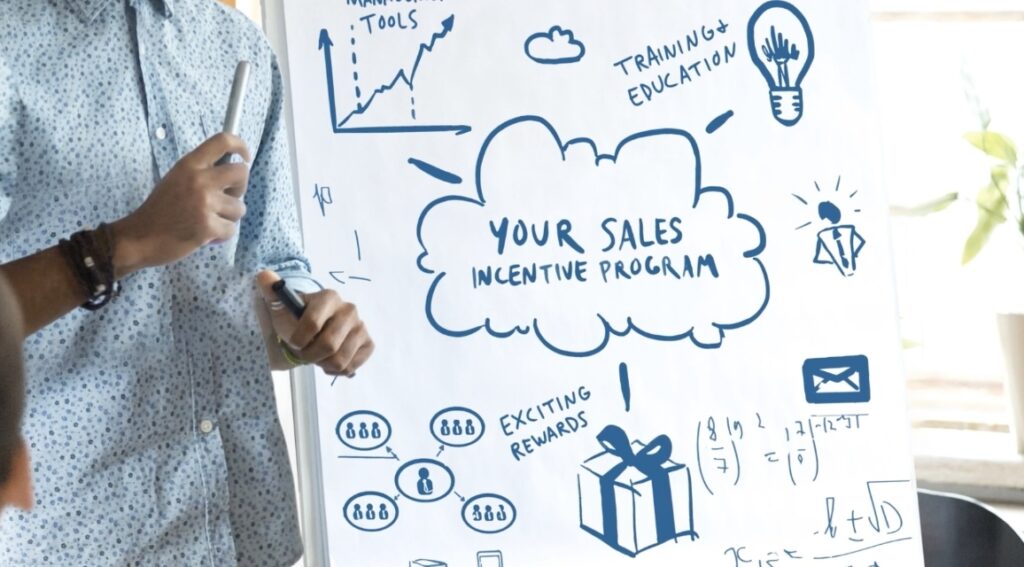
- Incentive and rewards programs — motivating desired behaviors through structured recognition, points-based rewards, and experiential travel
- Communication and engagement — maintaining consistent visibility through portals, content, and direct touchpoints
- Analytics and optimization — using program data to identify what’s working and where engagement is slipping
Each element reinforces the others. A partner who onboards smoothly, understands your product, and earns meaningful rewards for strong performance is one who will prioritize your brand reliably, and over time.
Why PRM Has Become a Strategic Priority
The scale of indirect commerce makes this increasingly non-negotiable. Forrester’s Buyers’ Journey Survey of more than 18,000 B2B buyers found that nearly 70% purchased through a channel partner rather than directly from the supplier. For most organizations, the partner experience is the customer experience.
Yet partner disengagement remains widespread. Partners encounter friction during onboarding, go quiet between promotions, and lose motivation when reward structures don’t reflect what they actually value. The result: partners who technically represent your brand but rarely lead with it.
Effective PRM directly addresses that gap, and the market investment reflects how seriously organizations are taking it. According to a Grand View Research report, the global partner relationship management market was valued at $90.2 billion in 2024 and is projected to reach $226.5 billion by 2030, growing at a compound annual rate of 16.6%. That trajectory reflects a fundamental shift in how organizations view partner infrastructure, not as overhead, but as a growth lever.
The Role of Incentives in PRM
Of all the components that shape partner loyalty, incentive programs are among the most directly controllable. They don’t require a market shift or a product refresh. They work by making the right behavior worth more to your partners than the alternatives.
The IRF’s 2025 Top Performer Study found that 49% of organizations run dedicated channel partner recognition programs, and that top-performing companies consistently embed rewards and recognition into their broader business strategy rather than treating them as standalone promotions.
The distinction matters. A one-time SPIFF during a product launch drives a short-term spike. A sustained incentive program, with tiered rewards, training incentives, deal registration bonuses, and recognition tied to ongoing performance, builds the kind of loyalty that keeps your brand top of mind between pushes.
The same research found that nearly all top-performing companies (99%) report strong executive backing for their reward and recognition programs. Organizations achieving the best results aren’t treating PRM as a sales ops task, they’re treating it as a company-wide strategic commitment.
Read more in our white paper, “Designing Channel Partner Incentive Programs”
What Separates High-Performing PRM Programs
Strong PRM programs share a few hallmarks that distinguish them from those that underperform:
Clarity. Partners engage at significantly higher rates when they understand exactly how to earn rewards, what resources are available, and what success looks like. Ambiguity in program rules is a direct participation killer.
Reward relevance. Not every partner is motivated by the same incentive. A points-based platform offering choice, merchandise, travel experiences, gift cards, tiered recognition, gives partners agency and increases long-term stickiness.
Global scalability. For organizations with multi-region partner networks, PRM must account for cultural reward preferences, language accessibility, and local compliance requirements. A program built for a U.S. distributor won’t automatically resonate in APAC or EMEA.
Consistent communication. Partners disengage when they lose visibility into their progress. Regular performance updates, milestone acknowledgment, and recognition throughout the program cycle, not just at year-end, sustain momentum and reinforce commitment.
Building a PRM Strategy That Pays Off Long-Term
The most successful organizations treat partner relationship management not as a program to launch, but as a relationship to build. A 2022 IRF study found that at least half of companies had increased their channel partner incentive spending, a reflection of the growing recognition that consistent investment in partner relationships compounds over time. Brands that fund and refine their PRM strategies build channel networks that outperform year after year.
Any vendor can offer a rebate. Far fewer can deliver a partner experience, built on enablement, structured recognition, and genuine relationship, that makes partners actively want to sell your products first.