Table of Contents
Share This Post
A well-timed gift does something that an email, a meeting, or a performance review rarely can, it makes someone feel genuinely seen as a person, not just a professional contact.
That’s why corporate gifting programs have moved from a seasonal afterthought to a year-round strategic priority. A Coresight Research survey of 300 U.S. corporate gift buyers found that employee appreciation and milestone gifting ranked as the single most common gifting occasion, cited by 66% of respondents, up from 64% the prior year, reflecting a clear shift toward year-round, relationship-centered gifting rather than one-off seasonal gestures.
But gifting without structure is just spending. The organizations that see real returns from their programs, stronger engagement, deeper loyalty, and more memorable moments, are the ones that build intentionally. Here’s how to do it from scratch.
Step 1: Define Your Gifting Goals
Before selecting a single item, get clear on what the program is meant to accomplish. A corporate gifting program can serve multiple audiences and multiple purposes, and each requires a slightly different strategy.
The three most common gifting goals are:
Employee recognition and appreciation. Milestone moments, service anniversaries, performance achievements, onboarding, team wins, are natural anchors for employee gifting. The goal here is to reinforce belonging and signal that the organization notices and values individual contributions.
Client and partner retention. Coresight Research found that 48% of corporate gift-givers reported substantial benefits in relationship building from gifting, and 45% cited substantial benefits in making recipients feel valued. For client-facing programs, gifting is relationship infrastructure, not a luxury.
Brand awareness and culture-building. Thoughtfully curated gifts that reflect your organization’s values reinforce brand identity with every delivery, whether that’s an employee’s first day or a partner’s contract renewal.
Defining the goal determines everything downstream: who receives gifts, what they receive, how often, and what budget makes sense.
Step 2: Set a Budget That Scales
Gifting budgets vary widely by audience and occasion, but the principle is consistent: invest in fewer, more meaningful gifts rather than high volumes of forgettable ones. Coresight Research found that organizations are increasingly giving fewer but higher-value gifts, with more respondents citing spending $100 or more on one-to-many corporate gifts, a sign of a maturing understanding of quality over quantity.
A practical framework for budgeting by tier:
- Spot recognition / peer appreciation: $25–$50 per recipient
- Milestone and anniversary rewards: $75–$150 per recipient
- Client and partner gifts: $100–$250 per recipient
- Top performer / leadership recognition: $200+ per recipient
Build flexibility into your budget for global recipients, where shipping costs, customs requirements, and cultural gifting norms may affect per-unit economics significantly.
Step 3: Know Your Audience and Let Them Choose
The single biggest driver of gifting success is relevance. A generic gift that misses the mark communicates the opposite of what you intend. Research consistently shows that recipient choice dramatically increases the perceived value of a gift.
IRF research on the psychology of points and reward programs finds that the number of redemption options is positively associated with employee identification, engagement, and intrinsic motivation, and that the greater the choice available, the more value participants place on their rewards and the program overall. Separate IRF program design research reinforces why: experiments and studies consistently show that most employees actually prefer well-selected, choice-based rewards over a simple cash equivalent, and that non-cash rewards of all types generate more discussion, stronger affinity, and greater long-term engagement because, unlike cash, people talk about them.
This doesn’t mean gifting has to be impersonal. The best programs combine a curated selection with meaningful context, a personal note tied to a specific achievement, a catalog filtered by category, or a points-based reward that lets employees redeem over time.
Step 4: Select Your Gift Categories
A well-rounded corporate gifting program draws from multiple gift categories depending on audience, occasion, and budget:
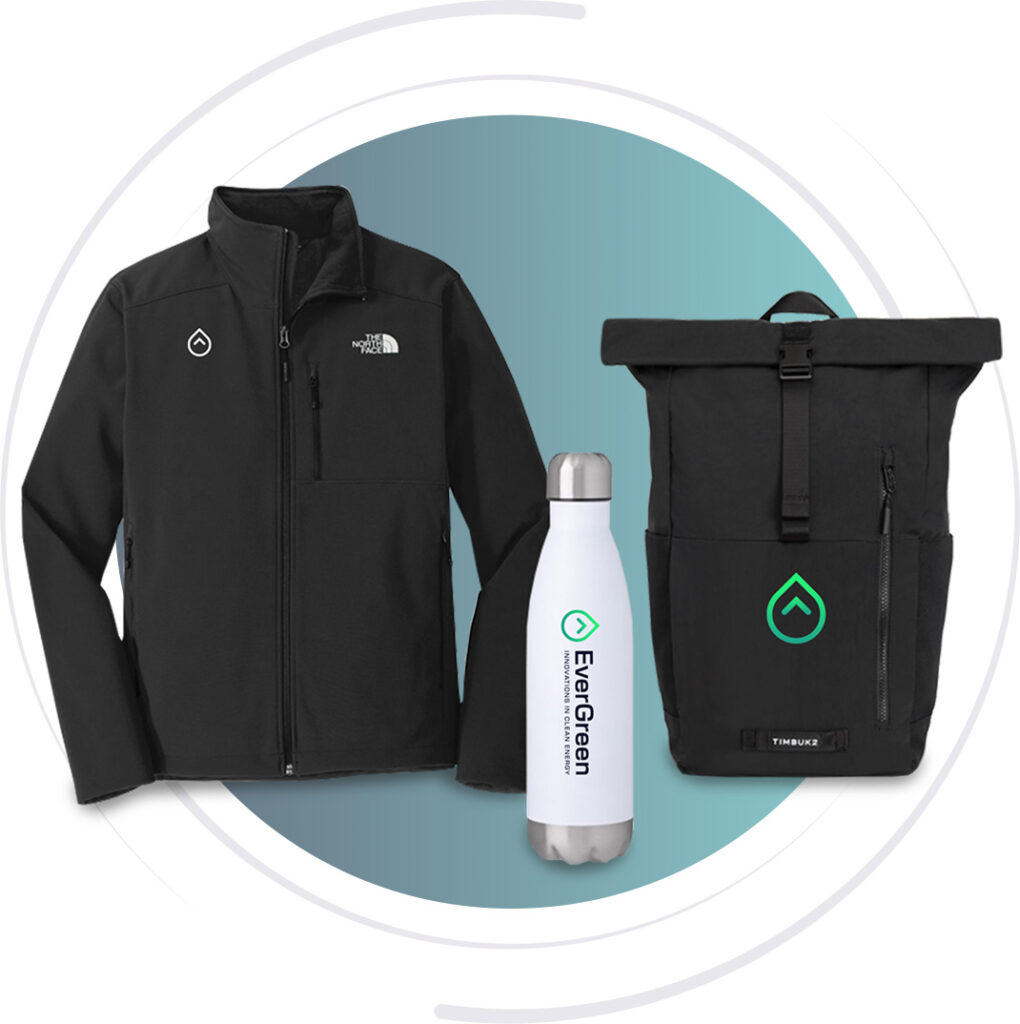
Merchandise and branded items. Physical gifts, premium apparel, tech accessories, home goods, wellness products, create lasting tangible reminders of the recognition moment. They are especially effective for milestone recognition, where the goal is something employees keep and display.
Digital and physical gift cards. Both physical and digital gift cards ranked as the most popular corporate gifting items in Coresight’s research, with organizations planning to expand into broader variety and higher quality options. Cards work well for immediate spot recognition and for distributed workforces where logistics make physical delivery complex.
Experiential rewards. Events, outings, wellness experiences, and curated adventures create lasting memories that merchandise cannot replicate. These are most powerful for top-performer programs and team-level recognition.
Points-based reward programs. For ongoing recognition that spans multiple occasions throughout the year, a points platform gives employees the flexibility to accumulate and redeem rewards on their own timeline, across merchandise, gift cards, and experiences within a single catalog.
Step 5: Build Your Fulfillment and Delivery Strategy
The gift experience doesn’t end with selection, it ends with delivery. A beautifully chosen gift that arrives late, damaged, or without context loses most of its impact.
Key fulfillment decisions to address upfront:
Centralized vs. decentralized management. Coresight Research found that 48% of organizations manage corporate gifting entirely in-house without a dedicated platform, and among those, the most commonly cited challenges were inability to purchase gifts from multiple brands or retailers and limited choice. A centralized platform eliminates these friction points and creates a consistent experience across teams and geographies.
Global logistics. For organizations operating across multiple countries, gifting logistics require advance planning around customs regulations, local delivery timelines, and cultural norms. What feels like a thoughtful gift in one market may carry different connotations in another.
Personalization at scale. Whether that means a personalized note attached to every delivery, recipient-initiated delivery addresses, or curated bundles by role or tenure level, personalization is the variable most closely linked to perceived gift quality.
Step 6: Measure and Refine
A gifting program should be treated like any other strategic initiative: tracked, measured, and improved over time. Key metrics to monitor include employee engagement scores tied to gifting moments, client retention rates, redemption rates on choice-based programs, and qualitative feedback from recipients.
The most sophisticated programs also align gifting data with broader recognition metrics, tracking which occasions, gift types, and delivery methods generate the strongest responses and reinvesting accordingly.
Build Your Program on the Right Infrastructure
The difference between a gifting initiative and a gifting program is infrastructure. Without a platform to manage catalog selection, fulfillment logistics, personalization, and reporting, even well-funded gifting programs fragment under the weight of manual execution.
Xceleration’s RewardStation® platform provides the end-to-end infrastructure that transforms gifting intentions into consistent, scalable, and genuinely memorable experiences, for employees, clients, and partners across more than 90 countries. From curated reward catalogs to global fulfillment and points-based redemption, RewardStation® gives HR and program leaders the tools to build a gifting program that delivers on its promise every time.