Table of Contents
Share This Post
Retention is no longer just an HR concern, it’s a business imperative. Despite encouraging signs that the Great Resignation has cooled, the challenge of keeping top talent has not. According to Gallup’s Employee Retention and Attraction Indicator, 51% of U.S. employees were watching for or actively seeking a new job as of late 2024. That’s one in two members of your workforce with one foot out the door.
If your organization is struggling with a high employee turnover rate, you’re not alone, but you can’t afford to wait. The cost of losing a single employee ranges from 40% to 200% of their annual salary, depending on the role. Multiply that across an organization and the financial impact is staggering. More importantly, the human cost, lost institutional knowledge, declining team morale, and disrupted productivity, is harder to quantify but just as damaging.
The good news? Much of this turnover is preventable. Here’s how to build a retention strategy that actually works.
Why Employees Leave (and What They’re Really Looking For)
Before you can reduce your employee turnover rate, you need to understand what’s driving it. Compensation gets the most attention, but research consistently tells a different story. According to recent workforce data, engagement and culture (37%), well-being and work-life balance (31%), and a lack of recognition top the list of reasons employees look elsewhere, while pay comes in far lower than most leaders expect.
The takeaway: employees don’t just leave for more money. They leave when they feel unseen, undervalued, or disconnected from their work.
1. Make Recognition a Strategic Priority, Not an Afterthought
If there’s one lever organizations consistently underutilize, it’s recognition. According to landmark research from Gallup, employees who received high-quality recognition were 45% less likely to have left their job over a two-year period. Those receiving recognition that met four or more pillars of strategic recognition, fulfilling, authentic, personalized, equitable, and embedded in culture, were 65% less likely to be actively searching for another job.
Yet the gap between leadership intent and employee experience is wide. While 42% of senior leaders now strongly agree that recognition is a key pillar of their engagement strategy (up from 28% in 2022), only 22% of employees say they receive the right amount of recognition for their work.
Strategic recognition isn’t a quarterly shoutout or an annual awards dinner. It’s a consistent, personalized practice woven into your culture, one that acknowledges not just what employees do, but who they are. Companies that get this right see 31% lower voluntary turnover compared to those that don’t.
What this looks like in practice:
- Peer-to-peer recognition programs that empower employees at every level to acknowledge each other
- Milestone recognition that celebrates tenure, growth, and personal achievement
- Points-based reward systems that give employees autonomy and choice in how they’re rewarded
- Recognition tied to company values to reinforce cultural alignment
2. Close the Engagement Gap
Disengaged employees cost organizations far more than their salaries. According to Gallup research, organizations with high employee engagement levels report 23% higher profitability, 18% higher productivity, and significantly lower turnover. Conversely, teams with low engagement experience turnover rates that are 43% higher than their more engaged counterparts.
Improving engagement starts with managers. Research consistently identifies manager relationships as a top driver of both engagement and departure decisions. Organizations should invest in equipping managers to have regular, meaningful check-ins, not performance reviews disguised as conversations, but genuine dialogue about what employees need to grow and feel valued.
Pairing engagement efforts with robust recognition infrastructure closes the loop: employees who feel engaged stay engaged when they’re consistently recognized for their contributions.
3. Prioritize Career Development and Growth
Nearly half of employees say they would stay at their company for stronger career advancement opportunities. Yet many organizations treat development as a benefit rather than a retention tool.
Building growth pathways into the employee experience, through mentorship programs, skills development, stretch assignments, and clear promotion criteria, signals that the organization is invested in the employee’s future, not just their current output. According to Gallup research, employees who feel encouraged to learn new skills are 47% less likely to be searching or watching for another job.
Recognition can play a powerful role here, too. Organizations that acknowledge and reward skill development reinforce a culture of growth that gives employees a compelling reason to stay.
4. Build a Culture Employees Don’t Want to Leave
Culture isn’t a perks list. It’s the daily experience of what it feels like to work at your organization, how decisions get made, how people treat each other, how achievements are celebrated, and how struggles are handled.
According to Glassdoor, 56% of employees say workplace culture is a deciding factor in whether they stay with an employer. A culture built on psychological safety, genuine appreciation, and shared purpose doesn’t happen by accident. It requires intentional design and consistent reinforcement from leadership.
Employee recognition programs, when implemented strategically, serve as a cultural backbone. They codify what the organization values, demonstrate that leadership pays attention, and make employees feel like they belong.
5. Use Data to Get Ahead of Attrition
Reactive retention strategies wait until employees are heading for the door. Proactive ones use data to spot risk before it becomes a resignation.
HR leaders today have access to more engagement data than ever before, pulse surveys, recognition analytics, performance trends, and exit interview patterns. Organizations that use this data thoughtfully can identify which departments or employee groups are most at risk and intervene early with targeted recognition, development support, or managerial coaching.
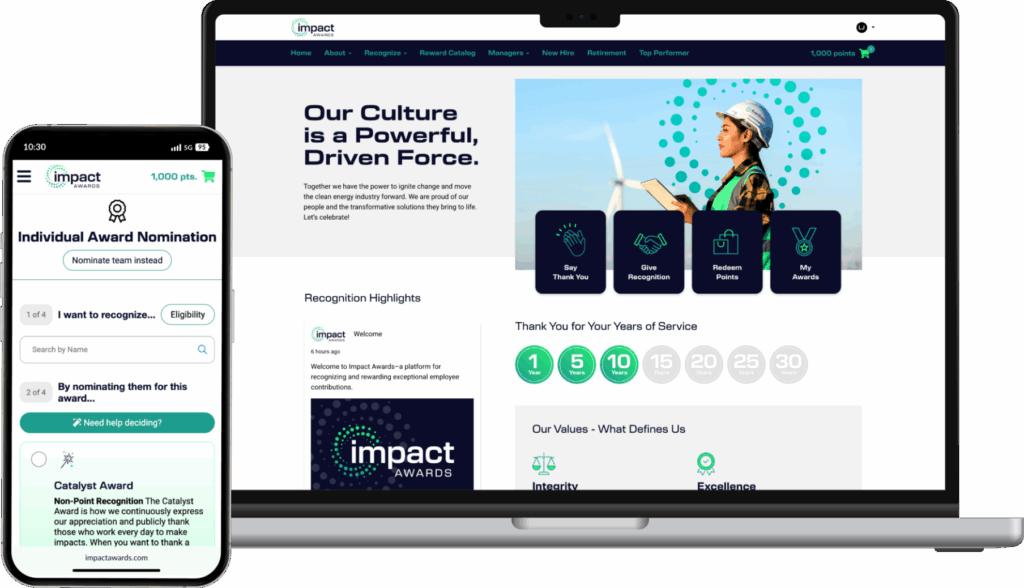
Recognition platforms like Xceleration’s RewardStation provide the analytics infrastructure to turn engagement data into action, helping HR leaders see not just who is being recognized, but how often, by whom, and whether recognition practices are equitable across the organization.
The Bottom Line
Reducing your employee turnover rate isn’t a single initiative, it’s a cultural commitment. Organizations that invest in recognition, engage their workforce with intention, and create genuine growth pathways consistently outperform those that rely on compensation alone.
Sources: Gallup, “The Human-Centered Workplace” (2024); Gallup Employee Retention and Attraction Indicator (2024); Aberdeen Group; Glassdoor Workplace Survey; Gallagher 2024 Workforce Trends Report